
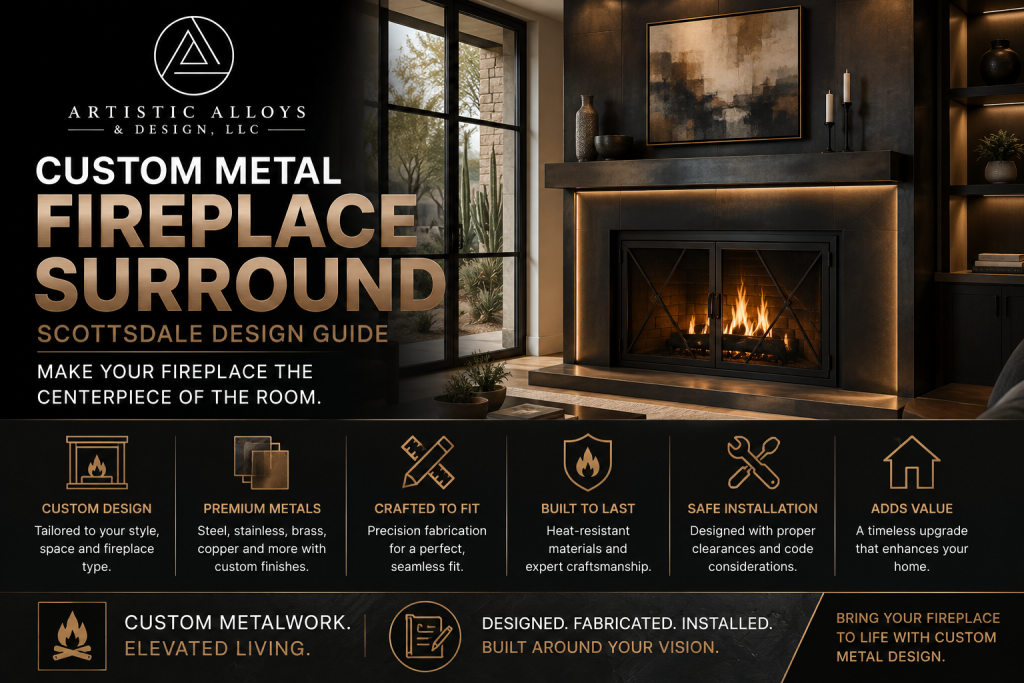
How to Plan a Custom Metal Fireplace Surround in Scottsdale
A fireplace often occupies the strongest wall in a living room, yet the factory trim around it may feel unfinished once the rest of the space has been remodeled. A custom metal surround can connect the firebox with stone, plaster, cabinetry and furniture while giving the room a clear focal point.
The work should begin with the installed fireplace and its requirements, not with a decorative sketch alone. Dimensions, clearances, ventilation, access and heat exposure all influence what can be fabricated safely.
Identify the Existing Fireplace
Start by recording the manufacturer, model and fuel type. A wood burning fireplace, gas insert and electric unit do not have the same installation requirements. Find the manual and keep it available for the designer, contractor and fabricator.
The metal surround should not cover required vents, controls, warning labels or service panels. If the original information is missing, identify the unit before deciding how close new metalwork may sit to the opening. Fireplace manufacturers provide model specific framing, clearance and finishing instructions rather than one universal set of dimensions.
Decide What the Metalwork Should Include
A fireplace project may involve a narrow trim frame, a broad surround, doors, a screen, a mantel, wall panels or a complete floor to ceiling feature. Define the boundaries before choosing the finish.
A modest frame can clean up the joint between the firebox and wall. Larger panels can create an architectural statement or conceal uneven transitions. Shelves and mantels introduce extra questions about projection, support and heat, so they need to be part of the original plan.
Coordinate With Stone, Plaster and Cabinetry
Metal looks best when it is designed with the materials around it. The edge may meet limestone, tile, brick, wood, microcement or smooth plaster. Each material has its own thickness and installation sequence.
Decide whether the metal sits on top of the wall finish, returns into it or aligns flush with nearby panels. Small changes in the finished wall can create visible gaps around a precisely fabricated surround. The contractor and fabricator should agree on final dimensions and tolerances before production.
Choose a Style That Fits the Room
Blackened steel suits many modern and industrial rooms, but it is not the only option. Stainless steel, brass, copper, bronze tones and painted finishes can create very different results. Texture also matters. Smooth panels feel quiet and contemporary, while hammered or patinated metal adds movement.
Use samples beside the flooring, stone and upholstery. Warm room lighting can change the appearance of a finish. A metal that looks gray in daylight may appear brown or nearly black at night. Artistic Alloys creates both contemporary and traditional fireplace elements using several metals and custom finishes.
Plan Doors, Screens and Access
A custom fireplace door or screen should be comfortable to operate and easy to clean. Consider the direction of swing, handle temperature, hearth depth and clearance from furniture. If the unit has controls or a removable glass panel, future service access must remain possible.
Do not assume that a permanent decorative panel can simply be placed over every existing component. The fireplace manufacturer, installer and local authority may require access or ventilation that the metalwork must preserve. HPBA advises homeowners to follow the appliance manual and verify that aftermarket screens are approved for use with the specific fireplace.
Allow for Heat and Movement
Metal expands when heated, and nearby building materials may move at different rates. The fabrication and attachment method should suit the size of the panels and expected temperature. An experienced fabricator can plan joints, returns and fasteners so the surround remains secure and visually straight.
The finish must also be appropriate for the location. Heat exposure near the opening may differ greatly from the temperature at the top or outer edge of a tall feature.
Measure at the Right Stage
Early dimensions help with pricing and design, but final measurements should reflect the completed firebox position, wall build up, hearth and adjacent finishes. Photograph concealed framing and utilities before they are covered. That record can help when attachment points are planned.
Do not order the surround from a rough opening measurement when tile, plaster or stone thickness is still undecided.
Build a Fireplace Feature for the Room
Artistic Alloys and Design creates custom fireplace surrounds, doors, screens, mantels and architectural metal elements for homes and businesses throughout Scottsdale and the Phoenix Valley. The team can coordinate the design with your fireplace, wall materials and interior style, then fabricate and install the finished metalwork. Call Artistic Alloys at 480 941 2611 to begin planning a custom fireplace feature for your property.
References
Artistic Alloys Custom Fireplaces
Regency Custom Fireplace Design Guide


